Fake Game Banner Test Cut Cost Per Registration And Deposit
Fake Game Banner Test Cut Cost Per Registration And Deposit
An affiliate and conversion experiment tested whether a fake game announcement could recover player intent during the sign-up journey. The team used creatives featuring a recognisable game that was not yet available on the product, then added an on-site Coming soon banner for part of the incoming traffic. The goal was simple: reduce CostPerReg and CostPerDep by keeping players engaged when they drifted away from the registration and deposit flow.
Why The Funnel Was Losing Players
The original funnel followed a familiar pattern. Players clicked an advert tied to a specific game, reached the site, and then tried to find that title. When the game was missing, many abandoned the process before registration or deposit. Session analysis revealed a repeated path: registration, deposit refusal, game search, failure to find the game, then self-exclusion.
This matters because traffic can still look profitable on paper while quietly damaging the player journey. If support teams face repeated requests about a missing title, acquisition costs rise beyond media spend alone. Self-exclusion linked to expectation mismatch also creates a clear retention problem.
How The A/B Test Worked
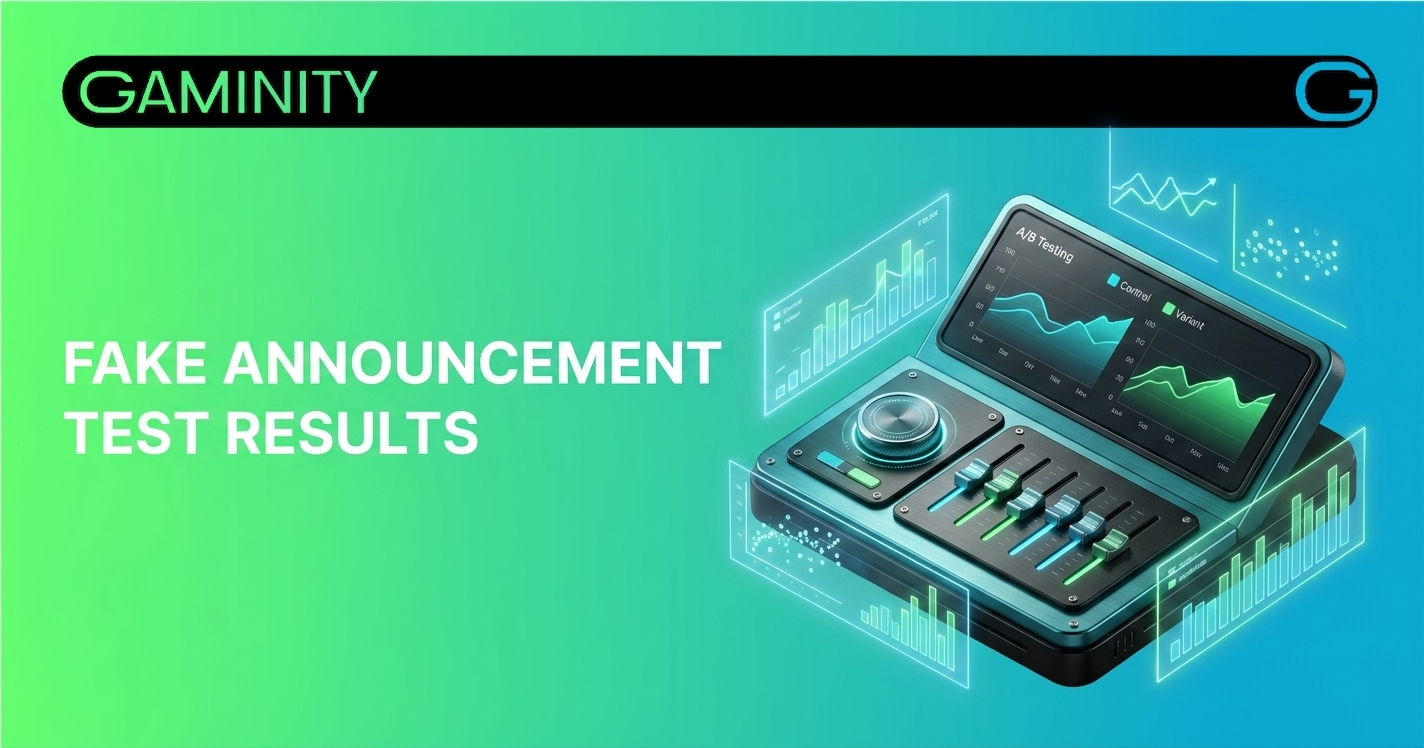
The team selected a funnel with already strong economics and assigned extra budget to test an intervention. Traffic was split into two groups. The control group saw the standard new player path, registration modal followed by deposit modal.
The test group saw the same flow, but with an extra on-site banner promoting the advertised game as Coming soon. The banner included the game name and a two-day timer. After five deposits, the banner was removed. Support staff also received guidance in case players asked about the title.
Results Across Key Metrics
The experiment ran on EUR 150,000 of spend. In the test group, CostPerReg reached EUR 85 and CostPerDep came in at EUR 221. In the control group, CostPerReg was EUR 94 and CostPerDep was EUR 241.
The test group therefore delivered lower acquisition costs on both core metrics. The uplift was not limited to headline efficiency. Among players in the test group who initially closed registration, 22% later completed it after clicking the banner. That suggests the banner worked as a recovery tool, not just as a visual extra.
What Operators Can Learn From It
This experiment shows how expectation management can influence conversion. A Coming soon message gave players a reason to stay on site instead of treating the missing game as a dead end. For operators and affiliates, that can protect marketing spend in campaigns built around game-led acquisition.
The operational detail also matters. To repeat this approach at scale, a platform needs to identify players by funnel source and split them accurately into test and control groups. Teams also need a practical process for turning banners on and off as campaign structures change. Without that, the test becomes hard to maintain even when the numbers are promising.
Limits Of The Test
The result was positive, but it came from one large funnel rather than a broad sample. The team noted that the experiment should ideally be repeated three or four more times to confirm the pattern. Large test budgets are not always available, which makes replication difficult.
Even so, the outcome offers a useful lesson for performance marketing in iGaming. Small on-site messages can change player behaviour when they match the intent created by acquisition creative. That creates room for better conversion economics without rebuilding the entire onboarding flow.
Source: igamingceo Telegram