Why iGaming Is Moving Beyond the Traditional RGS Model
Why iGaming Is Moving Beyond the Traditional RGS Model
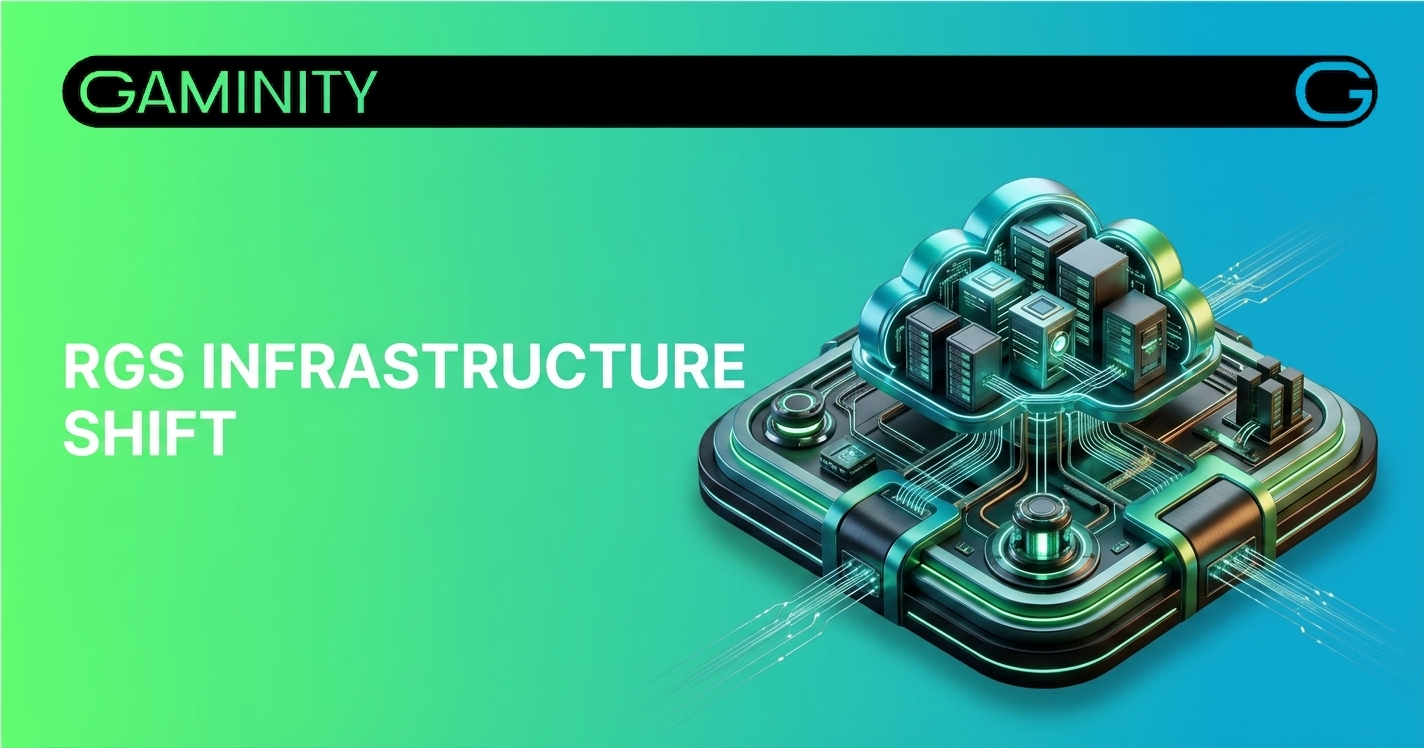
The Remote Gaming Server, or RGS, has long been treated as a core asset for game studios. At NEXT Summit Valletta 2026, that assumption was challenged directly. Robert Lenzhofer argued that much of the sector still spends time and budget rebuilding the same infrastructure instead of creating stronger games.
That view shifts the value discussion. Studios do not win on the basis of a private server stack alone. They win through game quality, original mechanics, commercial execution and the ability to deliver memorable player experiences.
Why The Classic RGS Model Is Losing Ground
The traditional RGS usually includes four core elements: a random number generator, a transactional database, an administration panel and operator APIs. Building that foundation can take months, and often up to a year. It also demands a dedicated technical team, which raises delivery risk and operating cost.
For smaller and mid-sized studios, that model can slow launch schedules and divert resources from product design. For larger suppliers, it can still create duplication across portfolios and markets. The wider message is clear: infrastructure is becoming a service layer, not the main point of differentiation.
Hizi.io's Shared Infrastructure Approach
Hizi.io presented a platform designed to replace repeated in-house RGS development with a shared infrastructure model. The company positions the service as more than a standard game server. It combines hosting, aggregation, operator integrations, development tools and support for regulated markets in a single environment.
This matters because suppliers now face pressure to release content faster while meeting technical and compliance requirements across multiple jurisdictions. A shared backbone can reduce engineering overhead and make it easier to scale distribution without rebuilding the same core systems each time.
No-Code Logic And AI-Assisted Development
One of the platform's headline features is Hizi Engine, a no-code builder for server-side game logic. It allows teams to create mechanics for slots, crash games, Plinko, Mines, Keno, roulette and blackjack without writing the underlying backend logic from scratch.
During the presentation, the platform reportedly generated the server side of a Book of-style slot, calculated RTP and adjusted it to a target setting before preparing the game for publication. RTP means return to player, the theoretical percentage of stakes paid back over time. For studios, automating that layer could shorten the path from concept to market-ready product.
The platform also includes an AI assistant that can convert an existing game concept into a working server mechanic. That covers the mathematical model, bonus features and core gameplay parameters. If that workflow performs consistently in production, it could lower the barrier for new studios and speed up prototyping for established ones.
Automation Is Reaching Certification
Hizi.io said it has built an automated certification process with RiskCherry. The system sends game builds directly from development into testing without manual handover. AI and automation then support test execution, bug detection, report generation and developer feedback.
This is significant for regulated iGaming, where certification delays can affect launch timing and revenue planning. Reducing manual steps can improve release discipline and help suppliers manage updates more efficiently. The longer-term ambition is even more ambitious: partial AI-led bug fixing within the testing cycle itself.
Cloud Hosting And Market Access
The platform also includes managed cloud hosting designed to handle synchronisation, scaling and global game server operations. That reflects a broader technology shift across iGaming. Owning every layer of infrastructure no longer guarantees better outcomes if a managed environment can deliver speed, resilience and compliance support.
Hizi.io said it already holds licences and certifications for most regulated European markets, while also supporting Brazil and South Africa, with North America as the next target. For suppliers, market-ready infrastructure can remove a major expansion hurdle. For operators, it can widen the pool of studios able to launch compliant content.
The Commercial Model And Industry Impact
Hizi.io is using a SaaS subscription model rather than revenue share. Entry pricing starts at about EUR 500 per month for a test environment, while production infrastructure starts at about EUR 1,500 per month. For enterprise clients, the company also offers a full source-code buyout option, which addresses concerns around vendor dependence.
The company expects to connect around 30 to 40 game studios to its infrastructure by the end of the year. Partners already named include BetGames, FDS Gaming, Tangelo and Lysia. If adoption grows, the sector could move closer to a model where owning an RGS feels as optional as owning a private data centre after cloud computing became standard.
For the wider iGaming market, the implication is straightforward. Studios can spend less time rebuilding backend plumbing and more time creating games that stand out. That is where commercial value is created, and where competition is now intensifying fastest.
Source: reg2bet Telegram